The benefits of collecting rare books go beyond most people's expectations. It can hold financial value, connect you to history, and build a community around something you love. Whether you're brand new or years into it, there's always something worth discovering. This post covers what makes the hobby genuinely valuable, not just as a pastime, but in several practical ways too.
1. Rare Books Can Be a Smart Long-Term Investment
Rare and out-of-print titles have sold for thousands, sometimes hundreds of thousands, of dollars at major auction houses like Christie's and Sotheby's. A signed first edition of a celebrated novel or a limited print run from a notable press can appreciate significantly over time.
But not every old book is valuable. Condition matters. Provenance matters. So does demand. According to the Rare Books and Manuscripts Section (RBMS), a division of the American Library Association, provenance and physical condition are among the most significant factors in determining a book's long-term value.
One of the clearest benefits of collecting rare books is that, when done with care and research, it can be a genuinely smart long-term investment.
2. First Editions Hold Special Historical Value
First edition book collecting has been around for centuries, and it's popular for a reason. A first edition is often the closest physical object to what an author originally published, before revisions, corrections, or updated covers. It's the original form.
For literary historians and collectors alike, that matters. A first printing of a major novel or a foundational scientific text gives you direct access to a moment in time. You're holding the object as it existed when those ideas first reached the public.
Some first editions also carry errors that were corrected in later printings. Bibliographers track these variations, and they can significantly affect value. A "points" list, which documents specific characteristics of a true first printing, is a reference serious collectors rely on before making a purchase.
If you're new to this, the Antiquarian Booksellers' Association of America (ABAA) maintains a directory of reputable dealers and guidance for buyers at every level.
3. Antiquarian Books Connect You to Living History
There's a difference between reading history and touching it. Antiquarian book collecting tips often circle back to this idea: the physical object is part of the experience.
An antiquarian book, generally defined as one printed before 1800, carries traces of its past. A bookplate from a private library. A dedication written in ink that's faded but still legible. A repair made by hand decades ago. These details don't appear in digital scans. They only exist in the physical copy.
Collectors who focus on antiquarian titles are often drawn to specific subjects or periods. Someone might collect early American pamphlets, 18th-century herbals, or illustrated natural history volumes. The focus makes the hunt more personal, and the finds more meaningful.
If you're interested in how libraries preserve these materials, the Library of Congress offers detailed resources on rare book conservation.
4. It's a Hobby That Grows with You
One thing that stands out about the book-collecting hobby is its adaptability. You don't need a large budget to start. You don't need much space. And there's no single right way to do it.
Rare book collecting for beginners often starts small, maybe with a favorite author, a specific genre, or books from a particular decade. A collection that starts with mystery novels from the 1940s might evolve into a focused archive of pulp fiction first printings with original cover art.
When people ask about the benefits of collecting rare books, this flexibility is often what surprises them most. The hobby fits whatever time and budget you have.
You can explore used and collectible options through Lioness Books' used book inventory to get a sense of what's available without starting at the deep end.
5. Rare Books Tell Stories Beyond the Text
Every rare book has a life outside of what's printed on its pages. Where it was sold, who owned it, and what it survived.
Some collectors find marginalia, notes written by previous readers, to be the most interesting part of a book. Scholars have spent careers studying annotations left in books owned by notable figures. What someone chose to underline or respond to in the margins can tell you a lot about how a text was understood at a specific time.
Physical evidence of a book's past includes bookplate stamps, library call number labels, and ownership signatures. These details place the book in a chain of hands, and that history is part of what makes a physical copy different from any digital version.
That layered storytelling is one of the less obvious benefits of collecting rare books, and collectors tend to appreciate it more the longer they're in the hobby.
6. Collecting Builds Community and Connection
Book collecting isn't something you have to do alone. There's a wide network of collectors, dealers, librarians, and enthusiasts who are happy to share what they know.
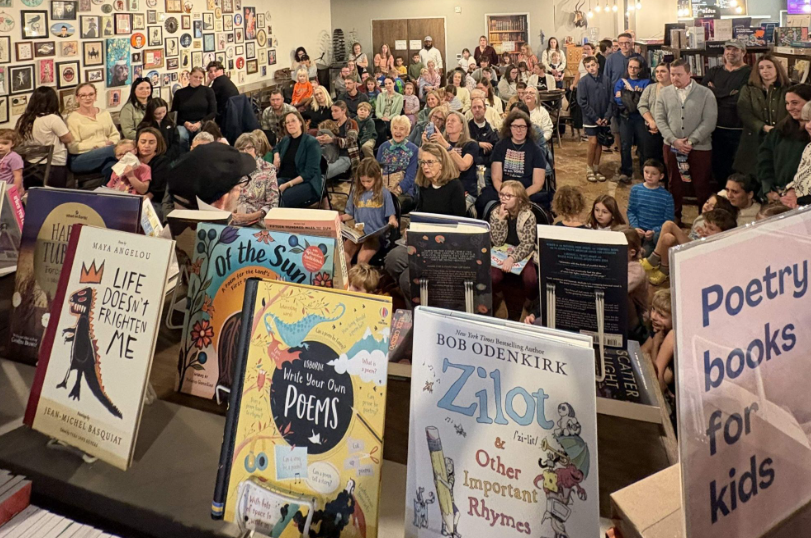
Book fairs bring the community together in person. If you're in Central Texas, Lioness Books connects readers and book lovers through community events and local partnerships throughout the Austin area. Whether you're just getting started or you've been collecting for years, it's a good way to meet people who share the same interest.
7. It's an Endlessly Rewarding Pursuit
Most hobbies have a ceiling. You reach a point where there's not much left to learn or discover. Rare book collecting doesn't work that way.
The field is enormous. There are thousands of niche areas, from medieval manuscripts to 20th-century poetry chapbooks to early cookbooks. Each one has its own community of collectors and its own body of knowledge. You could spend a lifetime in one corner and never run out of material.
The benefits of collecting rare books aren't only about what you own. They're in the research, the conversations with other collectors, and the occasional find that turns out to be more significant than you expected. That combination of learning and discovery is what keeps most collectors engaged for the long term.
Start Your Rare Book Journey at Lioness Books
At Lioness Books, we carry a rotating selection of used, collectible, and out-of-print titles through our mobile bookstore service across Central Texas.
If you're looking for something specific or want to know what's currently available, reach out or stop by one of our local Austin events. We're happy to help you find something worth keeping.
Frequently Asked Questions
1. Are rare books worth collecting?
Yes, for more than one reason. Some rare books hold financial value and appreciate over time, especially first editions and books with documented ownership history. Many collectors find the historical and personal value just as important. The right book depends on your interests and budget, but the hobby is accessible at almost any level.
2. What makes a book rare and collectible?
Several factors contribute. Limited print runs, author signatures, first editions, strong condition, historical significance, and documented ownership history all play a role. A book doesn't have to be old to be collectible. A signed modern novel or a limited press edition can be just as sought after as an 18th-century text, depending on the collector and the market.
3. How do I find rare books for sale?
You can browse our rare and collectible books collection at Lioness Books online from wherever you are. If you're in Central Texas, you can also stop by one of our local events to browse in person. We carry a rotating selection of used and collectible titles through our mobile bookstore service across the Austin area.
4. What is provenance and why does it matter in book collecting?
Provenance refers to the documented history of who owned a book before you. It can include previous owners' signatures, bookplates, handwritten inscriptions, or records of purchase from a notable library or estate. Provenance matters because it adds context and, in many cases, value. A copy of a novel signed by the author or previously owned by a historical figure is worth considerably more than an identical unsigned copy.
Key Takeaways
- Rare books offer value through history, personal connection, and financial return.
- Some rare books appreciate over time, making collecting a smart long-term investment.
- Beginners can start small with a favorite author, genre, or time period.
- First editions are valuable because they reflect a book's original, unrevised publication.
- A book becomes rare through limited print runs, signatures, condition, and historical significance.